Enterprise technology environments are no longer simple.
Most organizations today are managing a growing mix of cloud platforms, SaaS applications, cybersecurity tools, communication systems, data solutions, AI capabilities, and legacy infrastructure. Each solution may have been added for a valid reason. A team needed a faster process. A department needed a better platform. A security gap needed to be addressed. A cloud migration needed to move quickly.
Individually, each decision may make sense.
Together, however, those decisions can create an environment that becomes harder to manage, harder to secure, and harder to scale.
That is the challenge many IT leaders are facing today. The tech stack keeps growing, but the strategy behind it does not always keep pace. Over time, organizations can find themselves managing overlapping tools, disconnected platforms, duplicated spend, inconsistent security controls, and limited visibility across the full environment.
Why Complexity Is Increasing
Technology decisions are often made to solve immediate business needs.
A department adds a new SaaS platform to improve productivity. A security tool is introduced to address a specific risk. A cloud solution is adopted during a fast migration. A communication platform is added to support a distributed workforce. An AI feature is enabled inside an application employees already use every day.
None of these decisions are necessarily wrong. In fact, many are necessary for the business to keep moving. The problem arises when these decisions are made in isolation, without a broader view of the enterprise technology environment.
Over time, isolated decisions accumulate. Systems begin to overlap. Tools become underused. Costs increase. Data becomes harder to manage. Workflows become more fragmented. IT teams are left supporting an environment built reactively rather than intentionally.
The issue is not having too much technology. The issue is having technology that does not work together.
What Modern Enterprises Need
A strong tech stack should support the business, not slow it down.
That requires more than adding new tools when new needs appear. Organizations need clear visibility into what they already have, how each solution is being used, where systems connect, and where gaps, redundancies, or risks exist.
Modern IT strategy is not just about selecting the next platform. It is about understanding how every part of the environment supports the larger business objective.
Every solution should have a role. Every vendor should serve a purpose. Every system should fit into a broader operating model. When that alignment is missing, technology can become a source of friction instead of a driver of growth.
For IT leaders, this means moving from a tool-by-tool mindset to a more connected view of the enterprise. The goal is not simply to modernize the stack. The goal is to make the environment easier to manage, easier to secure, and better prepared for what the business needs next.
The Role of AI, Cloud, and Security
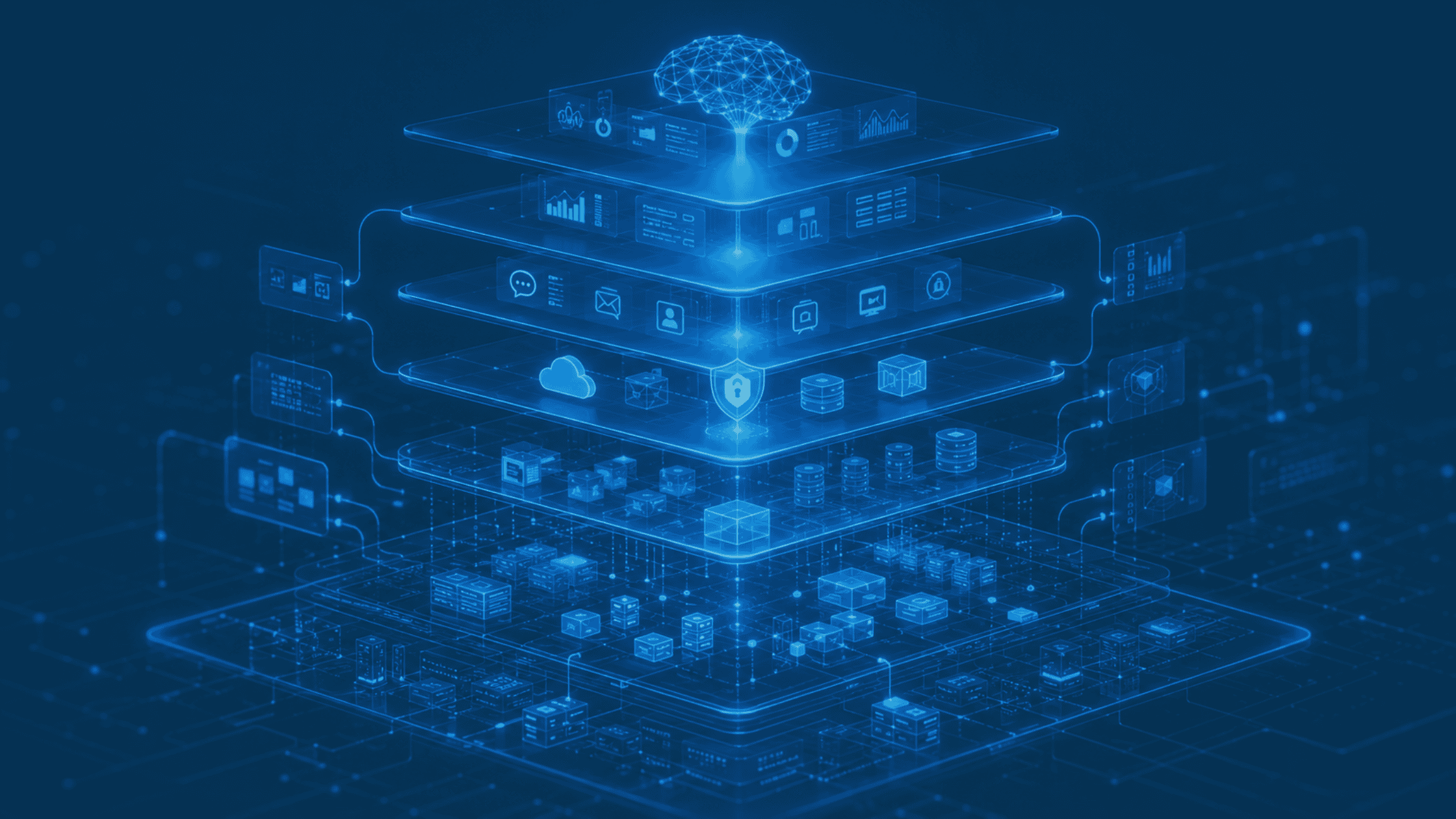
As AI adoption grows, cloud environments expand, and cybersecurity requirements become more complex, the need for a connected strategy becomes even more important.
These areas cannot be managed as separate conversations. Each layer impacts the others.
AI depends on the right data, infrastructure, governance, and security controls. Cloud environments require visibility, cost management, performance planning, and compliance. Cybersecurity needs to extend across users, applications, networks, vendors, and data. SaaS platforms need to be evaluated not only for features, but for security, scalability, and long-term value.
When these areas are managed separately, complexity increases.
When they are aligned, technology becomes easier to manage, measure, and scale.
This is where enterprise technology strategy matters. Without it, organizations may continue adding tools without solving the deeper operational challenges underneath. With the right strategy, technology becomes more connected, more intentional, and more useful to the business.
How GCG Helps
At GCG, we help organizations take a more strategic look at their technology environment.
We work with clients to evaluate their current stack, identify gaps, reduce unnecessary complexity, and align solutions with business needs. That includes cloud, cybersecurity, AI, communications, infrastructure, data, SaaS, vendor management, and managed services.
Our role is not just to help clients find technology. It is to help them understand how each solution fits into the larger environment and supports their long-term goals.
We help clients move from a reactive technology environment to a more intentional operating model, where platforms, vendors, security, cloud, communications, and managed services are evaluated together.
The result is a technology environment that is not only more modern, but more manageable.
Because a strong tech stack should not create more work for the business. It should create more clarity, control, and confidence.
The Bottom Line
The future of the enterprise tech stack is not about adding more tools. It is about building better alignment.
As technology continues to evolve, organizations need a strategy that connects systems, supports growth, and reduces complexity instead of creating more of it.
A strong tech stack should make the business more agile, more secure, and better prepared for what comes next. But that does not happen by accident. It happens when technology decisions are made with structure, visibility, and long-term strategy behind them.